

Lou Manzione’s career spanned corporate research in Bell Labs, academics as a dean of engineering, and president of the Association of Independent Colleges and Universities of New Jersey. After his B.E. from Cooper Union in 1975, he earned his PhD in Chemical Engineering from Princeton University in 1979. His thesis work was awarded Best Paper by the American Chemical Society, and he went on to win three other Best Paper awards.
Lou began his career in the Research Division of Bell Labs in Murray Hill, New Jersey. He was the first chemical engineer hired by Bell Labs for research on the emerging processes for fiber optics and microelectronics. His first program resulted in a patented chemical purification process for the reagents used to produce optical fiber (1). It was installed in the Atlanta fiber plant to provide extremely pure reagents to fabricate low-loss fiber capable of carrying optical pulses 80 kilometers without repeaters.
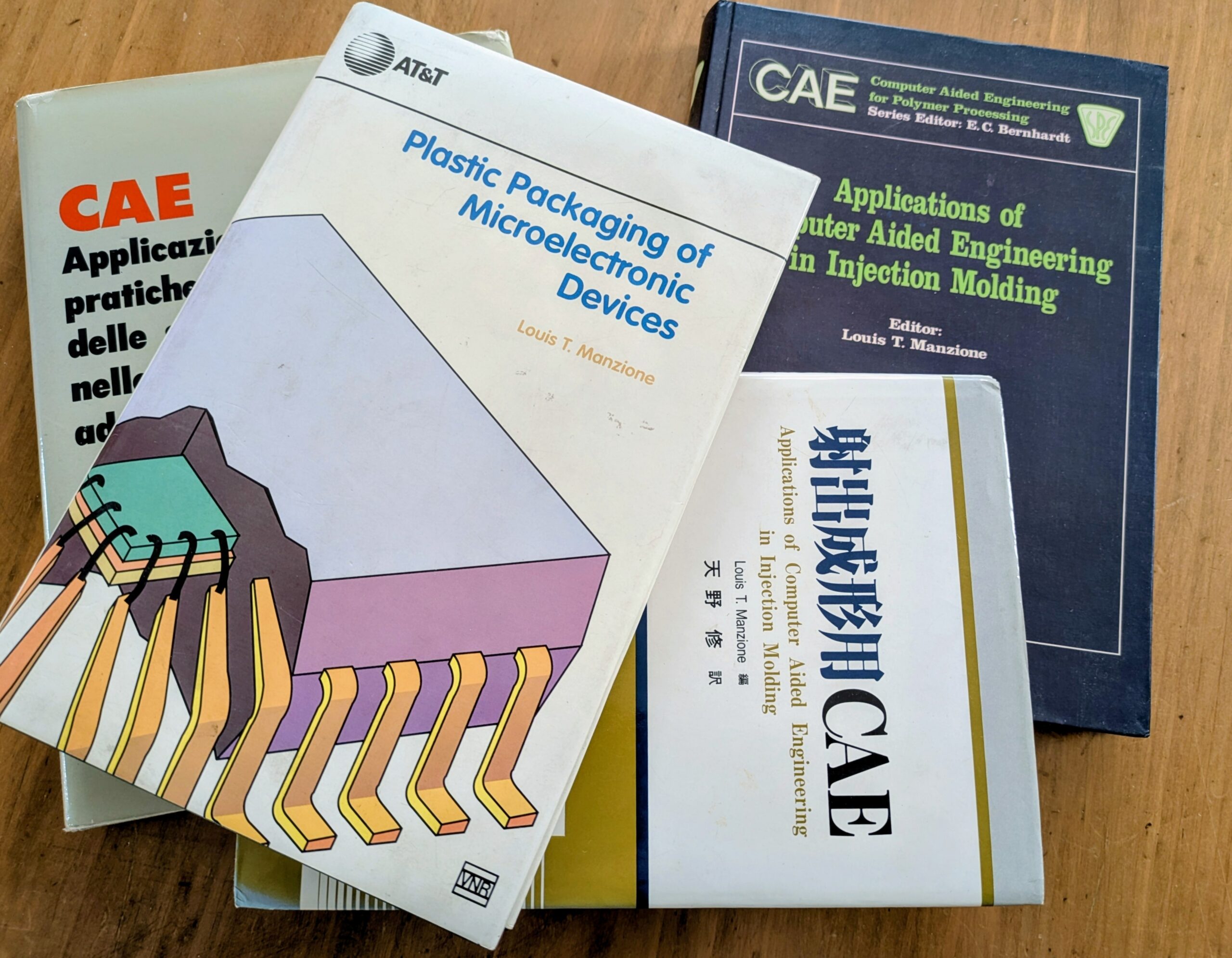
Lou led an extensive program in developing low-cost molded plastic encapsulation of computer chips. He wrote the first book on molded plastic packaging of microelectronic devices (2), now used on more than 95% of chips worldwide.
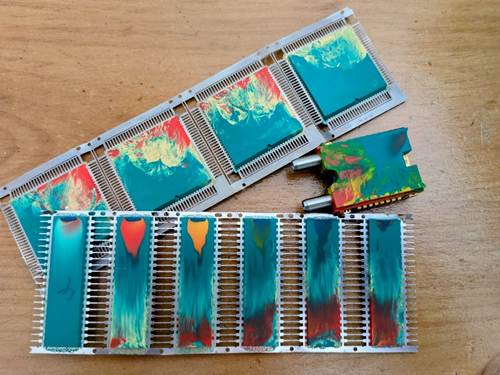
He was an early adopter of Computer Aided Engineering (CAE) algorithms for plastics injection molding. At the time, Bell Labs’ parent company (AT&T) was the country’s largest user of molded plastics. He worked closely with the AT&T manufacturing plants to implement yield improvement technologies for parts used across the nationwide telecom network. He was the editor of the first book on using CAE in Injection Molding (3).
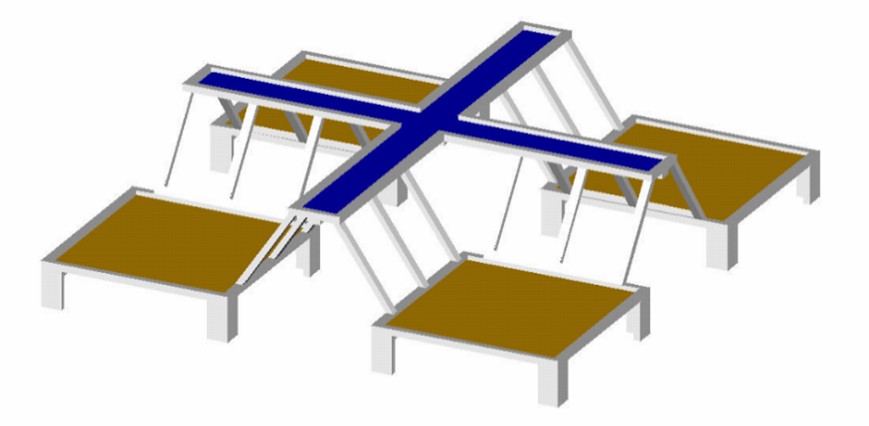
Lou was part of an extensive program on manufacturing improvements of complex optical networking systems at a time when network capacity was exploding with Wavelength Division Multiplexing. These systems had billions of dollars of annual sales, so manufacturing yield improvement was critical.
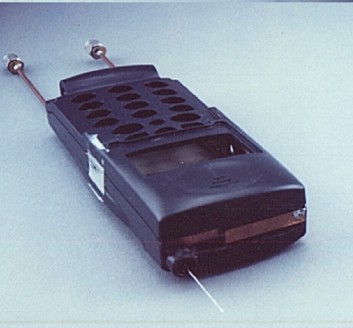
Lou was on the early cell phone design teams that helped define the features of this emerging technology, including antennas, cameras, user interfaces, and impact resistance. He assembled a team to develop a patented internal antenna to eliminate the external antennas of early models (4).
Other antenna work includes significant cost reduction technologies for microcell base stations. Lou has multiple patents for using low-cost plastics processing approaches to manufacture high-performance antennas that yielded tens of millions of dollars of cost savings. He was named a Fellow of the Society of Plastics Engineers for breakthroughs in the use of plastics in electronics.
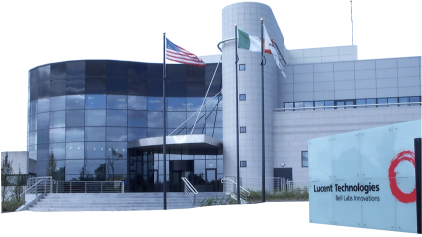
Lou was the founding Executive Director of Bell Labs in Ireland and moved to Ireland to launch this major international research center. He built the partnership of Bell Labs Ireland with nine Irish Universities, led by Trinity College Dublin, where he had an appointment as Research Professor. He personally led the tour of Bell Labs Ireland for Ireland’s Prime Minister. His career at Bell Labs produced 18 US patents, a number of which were commercialized into millions of products in use around the world.
After a nationwide search, Lou was named dean of the College of Engineering, Technology, and Architecture at the University of Hartford in 2005. He had responsibility for accredited engineering and architecture programs. Enrollment grew more than 50% during his time as dean, and he developed new industry partnerships, academic programs, and funded research initiatives.
With the Independent Colleges, he worked with the presidents of the 14 institutions that make up the independent sector of New Jersey. He relocated the Association offices to Trenton so that the Colleges would have better visibility and access in the State capital. He also consolidated the advocacy and fundraising functions into a single entity to grow efficiency and deliver greater value back to the 14 Colleges.
Within the Cooper community, Lou thanks his faculty at Cooper Union for preparing him well for his graduate study and career. In particular, Prof. Bove’s and Prof. Klerer’s discussions on career paths were an inspiration. He also thanks his classmates who made his time at Cooper Square memorable and came together to celebrate their 50th Reunion in 2025.
Professional Website: https://www.linkedin.com/in/lou-manzione-1189054/
Awards
Lou was inducted into the Connecticut Academy of Science and Engineering in 2008 and named its president in 2012. As chair of the Connecticut Engineering Deans Council, he led statewide programs in Nanotechnology, Broadband Internet, and other economic development initiatives. Lou was honored to be named Dean Emeritus at the University of Hartford in 2025.
Lou Manzione is the 2026 recipient of the CUAA Gano Dunn Award and a member of The Cooper Union Hall of Fame.
References:
- “Purification Process for Compounds Useful in Optical Fiber Manufacture”; R. L. Barnes, E. A. Chandross, D. L. Flamm, L. T. Manzione, L. F. Thompson; U.S. Patent No. 4,372,834, Issued February 8, 1983.
- Applications of Computer Aided Engineering in Injection Molding, L. T. Manzione, Editor, Hanser Publishers, Munich (1987). Translated to Japanese and Italian (302 pages). ISBN 3-446-14703-9
- Plastic Packaging of Microelectronic Devices, L. T. Manzione, Van Nostrand Reinhold, New York (1990), 377 pages. ISBN 0-442-23494-5
- “Antenna Package For A Wireless Communications Device”, I. Korisch, L. T. Manzione, Patent No. 6285324, Issued Sept. 4, 2001
- “Multiband Antenna Arrangement,” U.S. Patent Number 7,053,832, Manzione, L.T., Metz, C., Warncke, R.A. Issued May 30, 2006